
Why Did North Dakota’s Bison Vanish—and How Did They Muscle Back?
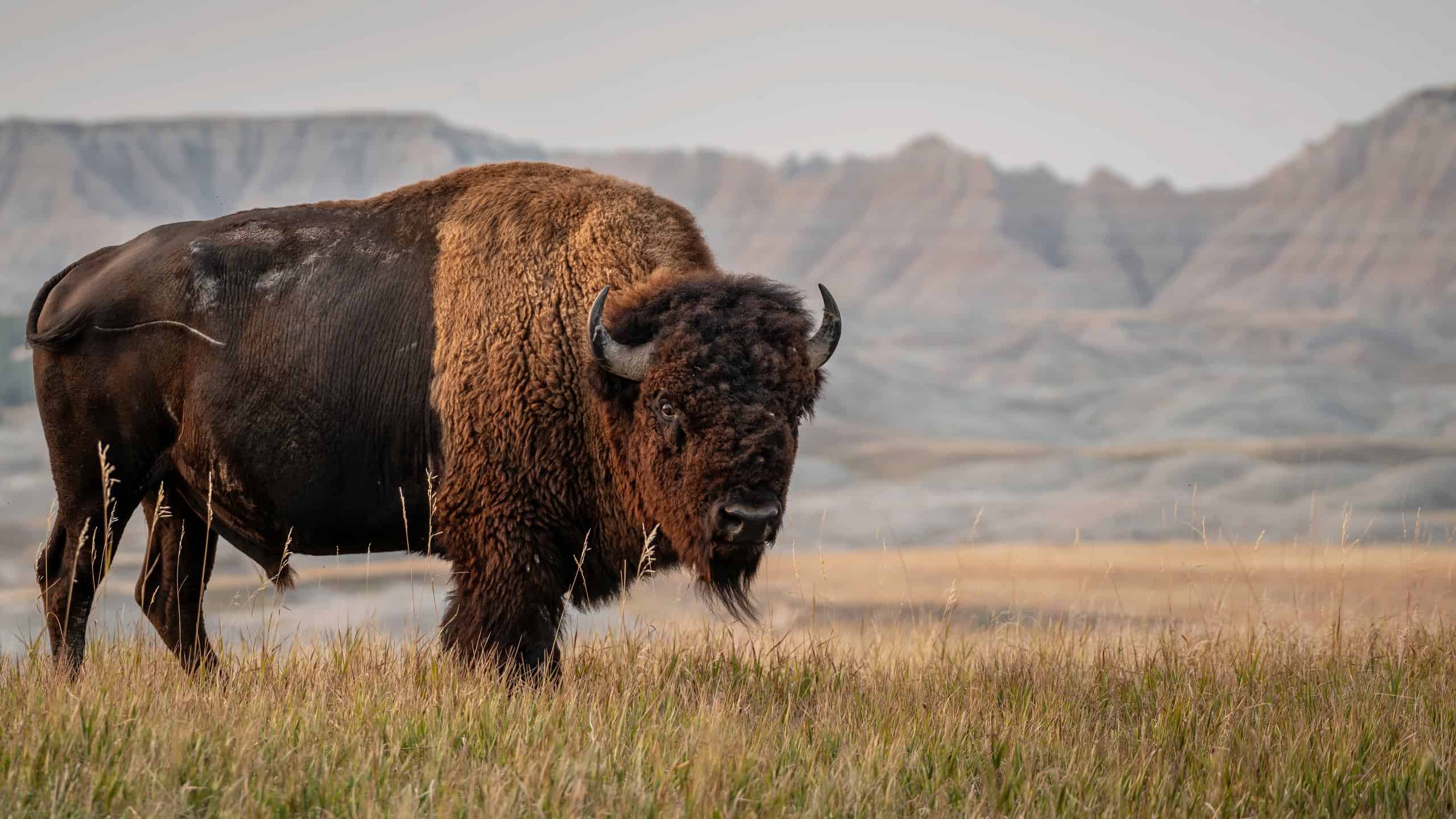
Several years ago, I had the chance to drive around the Dakotas and was struck by the haunting beauty and the sheer immensity of the landscape but also its utter emptiness. Our family drove long stretches of highway without a house, fence, wild animal, or even a bird in sight. Maybe it was the time of year or the time of day, I don’t know. It felt like an ecosystem waiting for something that was no longer present. Looking at the history of North Dakota, that feeling was warranted. What was missing was the plains bison, which once roamed this landscape in the millions.
As I learned more about the bison’s story, I discovered that the species is recovering well despite coming close to extinction. The state selected the plains bison as its official animal because it embodies core values leaders wanted to highlight: expansive grasslands, resilience, deep Indigenous roots, and a recovery story that transformed a nearly lost species into a living symbol. Today, bison on public lands and private ranches remind visitors that this animal still represents endurance, survival, and respect for the prairie landscape.
A Symbol of the Prairie Past
When North Dakota lawmakers considered official state symbols, the bison stood out as the animal most closely tied to the region’s history. Before large-scale commercial hunting in the nineteenth century, vast herds of plains bison moved across what is now North Dakota, shaping grasslands and sustaining Indigenous nations such as the Mandan, Hidatsa, Arikara, and Lakota. These herds influenced plant growth, soil health, and seasonal movement patterns across the plains.